I was going to do an update of our front yard again for Gail's Wildflower Wednesday, but when I looked at my last WW post, the photos looked almost identical, which means a lot of the plants in our yard have a nice long bloom time. There are also some that were not yet blooming, but are now. I decided to include a few, and then find some that weren't blooming yet last month.
The wild quinine has had a long bloom time.

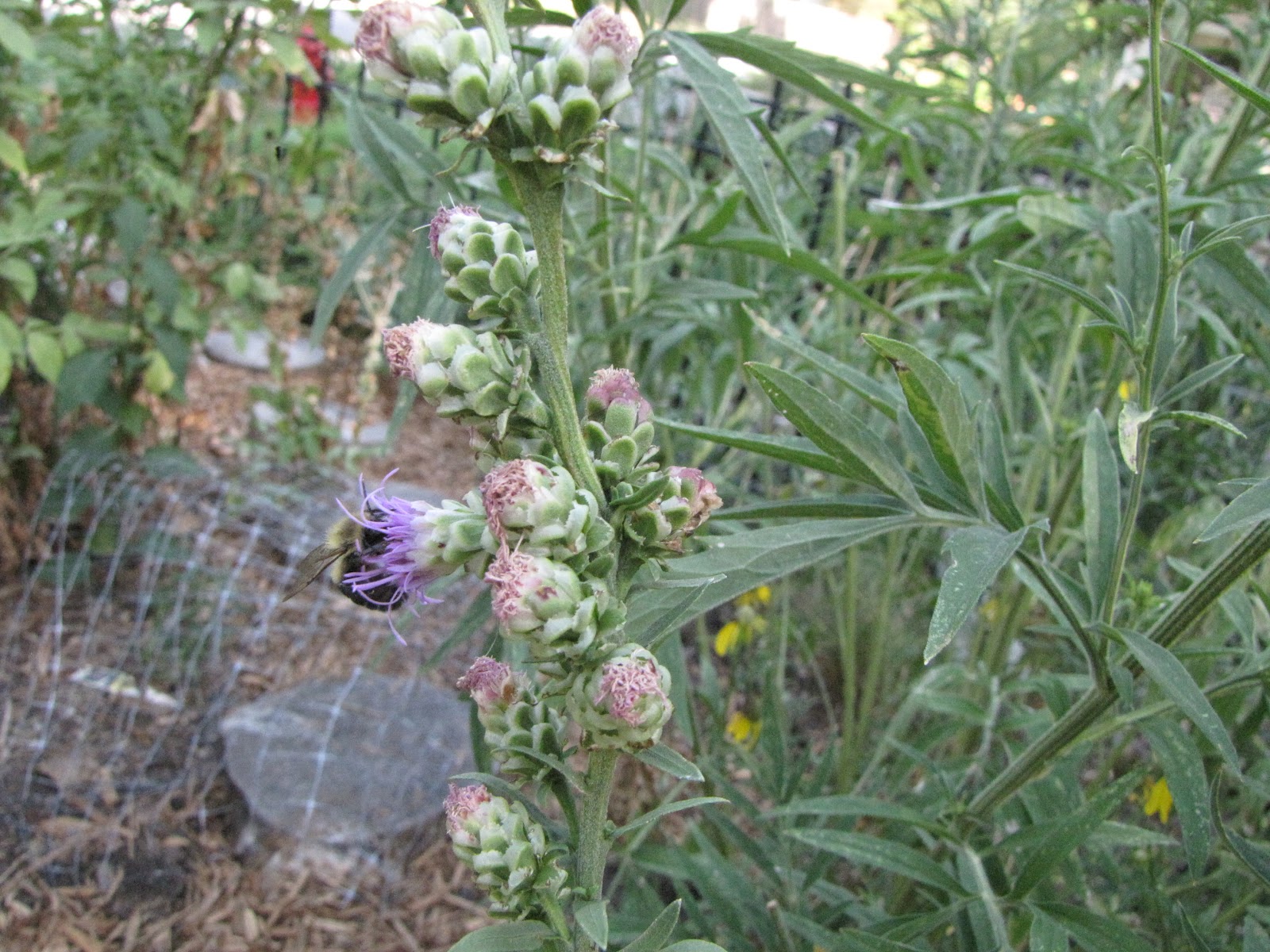
These liatrises, which I think are pycnostachya, are almost finished blooming. I have been deadheading the gray headed coneflowers, and they are sending out new blooms.

You can see where I've cut some off here, and some lovely new blooms.

Even though I've left the seedheads on the purple coneflowers, this plant is sending up some new blooms.

Pitcher sage is one of my favorite flowers. They will soon be opening up their lovely blue blooms.

I've had this helenium for over ten years. I'm thinking it may be autumale, which is native to our area. Can you tell?

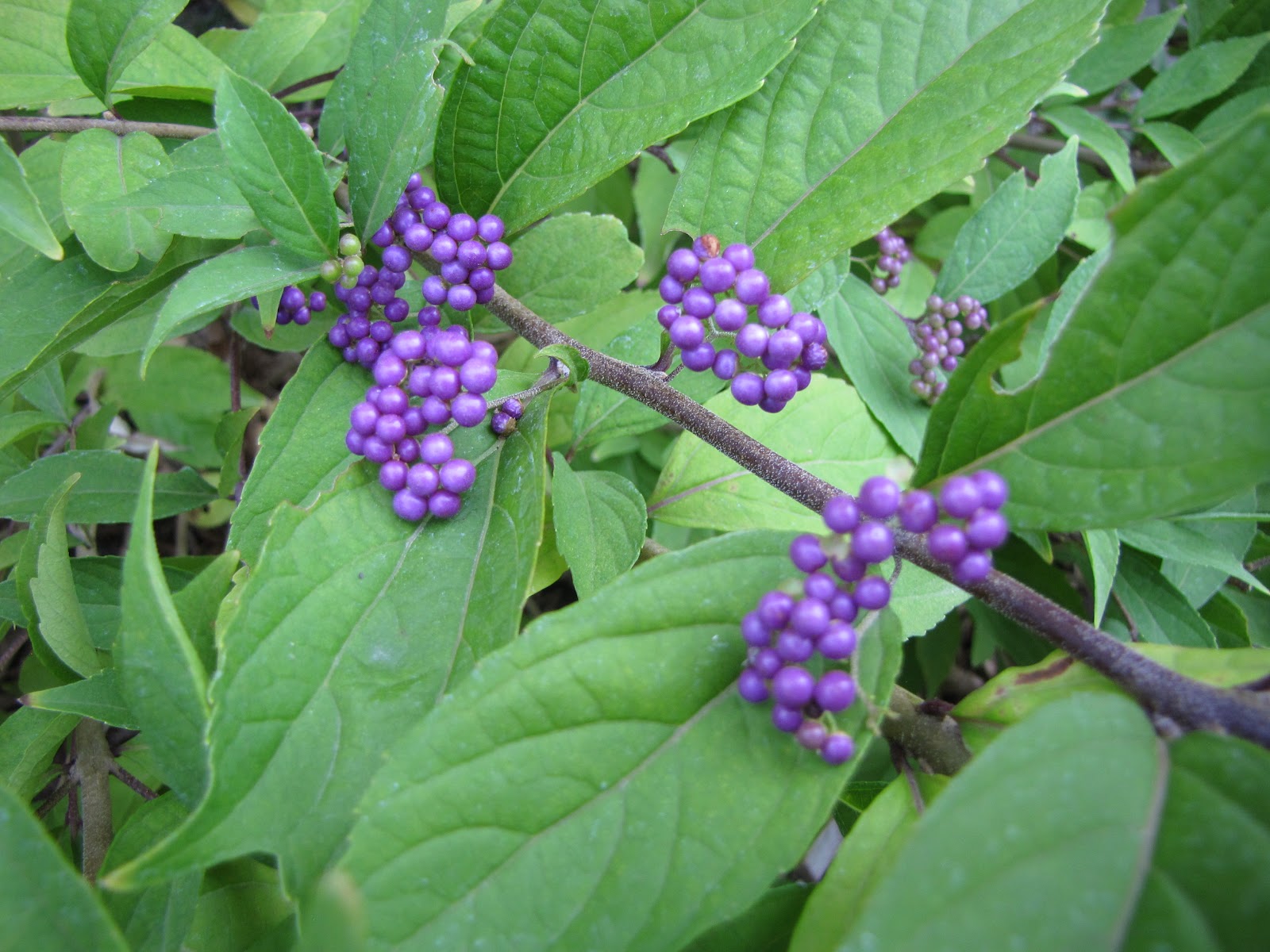
The beauty berries are ripening!

The rigid goldenrods held onto their buds for quite awhile, and I am excited they are finally opening up.

The pollinators are glad, too.

The liatris, I'm pretty sure, aspera, is still showing some color.

There are two wild sennas within 6 feet from each other. Both were a few inches tall last year, when I planted them. While this one was blooming away this summer, the other one got taller and wider. It had had a few blooms early on, but no seed pods like these. I thought maybe one was a male and the other female plant, since I don't know that much about them, but that doesn't appear to be the case.

Now, the other one, which was a give away at a garden tour at Benjamin's place in 2011, is putting on quite a show. His blog is The Deep Middle.

This cup plant was pretty small when I got it at a plant sale in some folks' yard this spring. I am a proud mama, but don't plan on letting this self sow as much as it could.

It's another one I've seen a number of pollinators on.

I am pleased the ironweed I transplanted from another part of the yard is doing well.

The taller type of wine cup plants have been blooming all summer.

The Joe Pye weeds are doing well, and still attracting the bees.

This short toothed mountain mint is a different kind than the one in the background in the above photo.

I remembered to go to the vegetable garden to take photos of the brown eyed Susans. I plan to take some seedheads to the front yard this fall, and let them grow there. I'll just have to be careful not to let them take over.

The toadflax have been growing in a wash tub for a number of years. They are too aggressive for the ground here.

I just got this wild ageratum, or blue mist flower this summer. After finding out it can be a spreader, I decided to plant it in a washtub. I keep having this feeling like I grew it many years ago, and did some battle with it. I love the bloom, though, and am hoping it survives winter. Oh, and I saw a monarch butterfly on it today.

I have to protect the purple prairie clover from the rabbits.

The other butterfly milkweeds are finished blooming, so I am glad this one still has color.

I'd like to find more narrow-leaf ironweed.

The Virginia mountain mint blooms didn't seem to last as long this year.

I have been watering this summer, partly because I have new plants that won't need it as much once they get established. As the days of no rain continue, and I start to feel guilty, I think of all the critters that benefit from the growth and blooms. Most of the flowers are doing pretty well. Here are some wider views. Not all of them are wildflowers. You can see Joe Pye weed on the left, and farther down, is the cup plant.

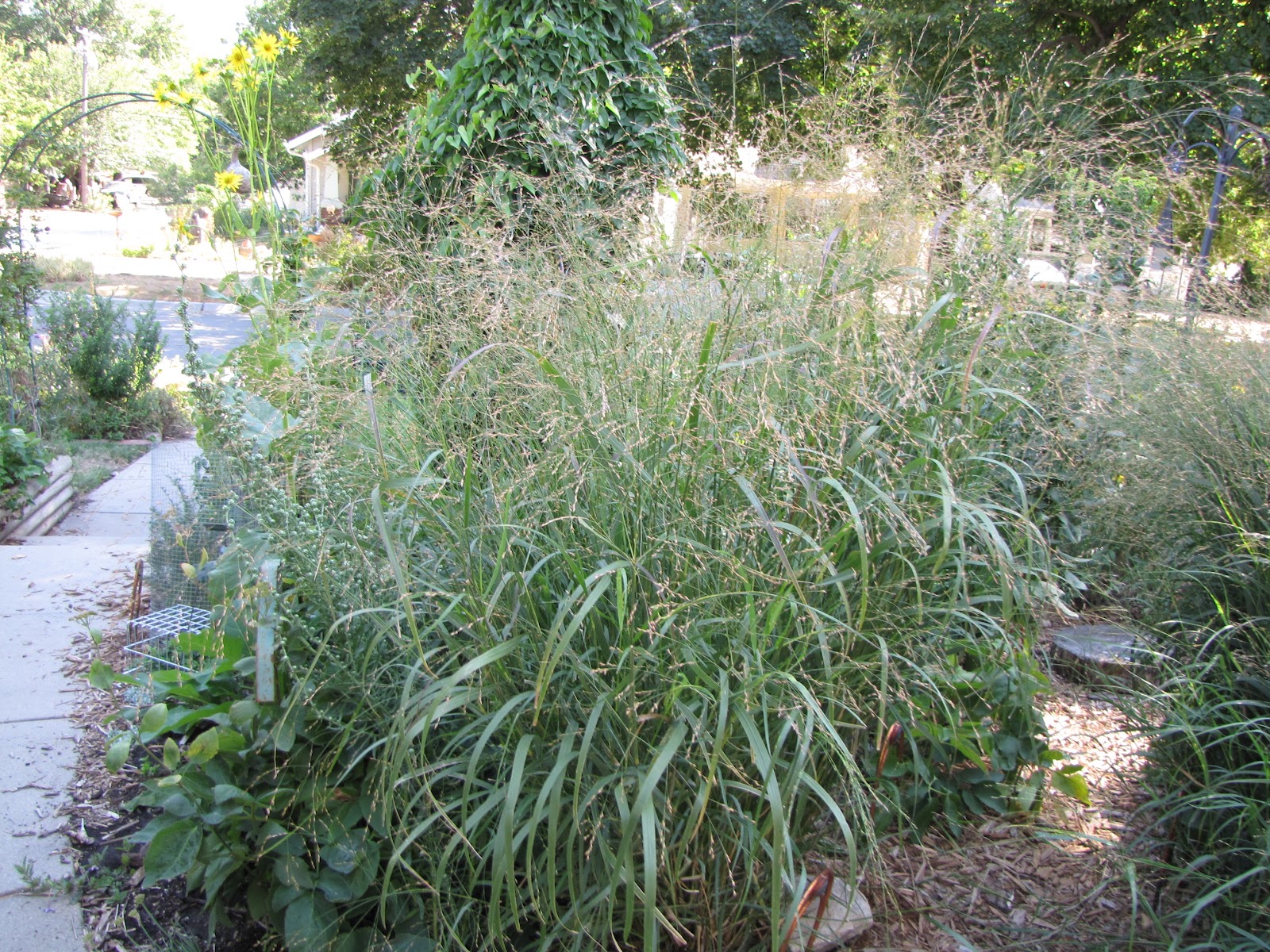
I'm pretty sure this switchgrass is panicum 'Prairie Sky'. I may have called it 'Northwind' in another post, but I think that is what is next to one of the wild sennas.

I'm glad I planted tithonia, Mexican sunflower, right in front of the porch. I've really enjoyed seeing the butterflies and bees on it. There is another one planted on the west edge of the yard.

Here's a wider view with one of the wild sennas, with the switchgrass, 'Northwind' behind it.

I want to close with a word of caution to those who have their blogs on Blogspot. For some reason, I was signed out today, and when I signed in, I got to a page that talked about the new look of Blogger. I didn't know if this was a more recent new look than the last one I knew of. I decided to look at my blog through a new format to see what it looked like. I wasn't even sure what it was. In the past, when you pushed "apply to blog" you weren't really changing it until you also saved it. Well, in this case, it changed without that next step. I didn't like it enough to want to change, so I had to go back and try to figure out how I had it before. I couldn't remember which template I had used, so I had to start over. I have been tweaking it this evening, but am not satisfied, so I will be doing more messing with it. I figured out that you now click on the picture of the template to just have a look at your blog in it. That's a major change. It would have been nice if Blogger would have cautioned people before experimenting.
I hope you and your gardens are thriving.
The wild quinine has had a long bloom time.

These liatrises, which I think are pycnostachya, are almost finished blooming. I have been deadheading the gray headed coneflowers, and they are sending out new blooms.

You can see where I've cut some off here, and some lovely new blooms.

Even though I've left the seedheads on the purple coneflowers, this plant is sending up some new blooms.

Pitcher sage is one of my favorite flowers. They will soon be opening up their lovely blue blooms.

I've had this helenium for over ten years. I'm thinking it may be autumale, which is native to our area. Can you tell?

The beauty berries are ripening!
The rigid goldenrods held onto their buds for quite awhile, and I am excited they are finally opening up.

The pollinators are glad, too.

The liatris, I'm pretty sure, aspera, is still showing some color.

There are two wild sennas within 6 feet from each other. Both were a few inches tall last year, when I planted them. While this one was blooming away this summer, the other one got taller and wider. It had had a few blooms early on, but no seed pods like these. I thought maybe one was a male and the other female plant, since I don't know that much about them, but that doesn't appear to be the case.

Now, the other one, which was a give away at a garden tour at Benjamin's place in 2011, is putting on quite a show. His blog is The Deep Middle.

This cup plant was pretty small when I got it at a plant sale in some folks' yard this spring. I am a proud mama, but don't plan on letting this self sow as much as it could.

It's another one I've seen a number of pollinators on.

I am pleased the ironweed I transplanted from another part of the yard is doing well.

The taller type of wine cup plants have been blooming all summer.

The Joe Pye weeds are doing well, and still attracting the bees.

This short toothed mountain mint is a different kind than the one in the background in the above photo.

I remembered to go to the vegetable garden to take photos of the brown eyed Susans. I plan to take some seedheads to the front yard this fall, and let them grow there. I'll just have to be careful not to let them take over.

The toadflax have been growing in a wash tub for a number of years. They are too aggressive for the ground here.

I just got this wild ageratum, or blue mist flower this summer. After finding out it can be a spreader, I decided to plant it in a washtub. I keep having this feeling like I grew it many years ago, and did some battle with it. I love the bloom, though, and am hoping it survives winter. Oh, and I saw a monarch butterfly on it today.

I have to protect the purple prairie clover from the rabbits.

The other butterfly milkweeds are finished blooming, so I am glad this one still has color.

I'd like to find more narrow-leaf ironweed.

The Virginia mountain mint blooms didn't seem to last as long this year.

I have been watering this summer, partly because I have new plants that won't need it as much once they get established. As the days of no rain continue, and I start to feel guilty, I think of all the critters that benefit from the growth and blooms. Most of the flowers are doing pretty well. Here are some wider views. Not all of them are wildflowers. You can see Joe Pye weed on the left, and farther down, is the cup plant.

I'm pretty sure this switchgrass is panicum 'Prairie Sky'. I may have called it 'Northwind' in another post, but I think that is what is next to one of the wild sennas.
I'm glad I planted tithonia, Mexican sunflower, right in front of the porch. I've really enjoyed seeing the butterflies and bees on it. There is another one planted on the west edge of the yard.

Here's a wider view with one of the wild sennas, with the switchgrass, 'Northwind' behind it.

I want to close with a word of caution to those who have their blogs on Blogspot. For some reason, I was signed out today, and when I signed in, I got to a page that talked about the new look of Blogger. I didn't know if this was a more recent new look than the last one I knew of. I decided to look at my blog through a new format to see what it looked like. I wasn't even sure what it was. In the past, when you pushed "apply to blog" you weren't really changing it until you also saved it. Well, in this case, it changed without that next step. I didn't like it enough to want to change, so I had to go back and try to figure out how I had it before. I couldn't remember which template I had used, so I had to start over. I have been tweaking it this evening, but am not satisfied, so I will be doing more messing with it. I figured out that you now click on the picture of the template to just have a look at your blog in it. That's a major change. It would have been nice if Blogger would have cautioned people before experimenting.
I hope you and your gardens are thriving.