I was going to do a post of photos taken from our front porch, but then, decided to go into the yard and take more photos. I'll let you know when I get off the porch. ;o) (By the way, this post was over a week in the making. I wanted to take more photos today, but it was very windy, and Larry wanted my help putting plants in the egress window and getting ready for winter.)

I've had trouble finding a good time to take photos, because there has either been too much or not enough light. I'm forgetting now what time of day this was, because these were taken a few days ago, and this post has been 3 days in the making so far. I didn't get to work on it yesterday, though. I used my zoom for this and some of the others, so I was still on the porch here. The tall plants are Joe pye weed, Meadow rue, and, on the right, Cup plant.

Here is a fuller view of the Cup plant, which is also in the next two photos. I'll be showing the other plants here closer, too.

Even when the plants are finished blooming, they have a beauty all their own.

There may be a few seeds left for the birds to eat.

We'll head to the west. I love the colors of fall, but spring and summer are still my favorite seasons.

Here we see Wild quinine, Switchgrass 'North Wind', Illinois bundleflower, and Grayhead coneflowers on the far right.

I used the zoom for this one. The tallest plants are Rigid and Ridell's goldenrods.

Here they are even closer. The little pink blooms are some kind of Boltonia, I'm pretty sure.

Still using the zoom:

Someone told me that deadheading Gray-head coneflowers does not extend their bloom season, but I did an experiment this summer, and the ones I did not deadhead were finished blooming several weeks before the ones I did deadhead. I did not deadhead the Wild senna. The seed pods are almost as cool looking as the blooms. I like Liatris in the fall, too.

Larry took most of the garden stakes out today, and put a tarp on the bench, so the next photos will need to be taken around that. He also took off the baskets that were protecting some plants from the rabbits. I'll have to get those back on. I also saw him start to pull some plants from pots. I requested that he leave that job to me, since not all of the plants are going to get pulled. I hope I stopped him in time. He does know that I do not clean up the flower beds until spring, though. There are some beneficial insects that overwinter in the stems. Hey, I need to ask Gail what plant it is she says should be taken out in the fall, though.

The grass near the stump is Switchgrass 'Northwind'. I am tickled that the strawberries under the bench produced this year, and are spreading. I meant to take the plants out that are next to them, except for my mother-in-law's 3 peonies, so they have more room. They are growing in there, though. I'll have to be careful when I take the other plants out.

Have I mentioned that this season flew by way too quickly for me? I retired in May, and am now subbing as a special education paraeducator, so I'm looking forward to next spring. My plan is to work 3 or 4 days a week when it is not gardening season, and 1 or 2 days a week when I can be out gardening. Maybe I'll be able to keep up better.

I'm still on the porch, and have turned the camera back to the east. I don't even know what kind of shrubs these are, and am not in love with them, but Larry takes care of them. There was a spring when a bunch of garter snakes mated in there. Beyond that is the one butterfly bush we have. I get it deadheaded several times during the season so it can't send seeds anywhere down stream. I've considered taking it down. It has gotten larger than it should for the space, but Larry has certain plants he likes, and this is one of them.

Here is where I got off of the porch. I think I've already named most of the noticeable plants, so I'm not going to label many here. The plant on the left next to the Liatris is one of my favorites, Whorled milkweed. I've mentioned I dug it from an area at our church that was about to be dug up. It was growing there on its own, so it is a regional native.

This is a few feet along the path, heading west.

The Little bluestems are quite pretty this time of year.

The Rudbeckia maxima is pretty cool looking still. Last year, its first here, it only had 3 or 4 blooms. Oh, I see the few blooms of the Prairie dock I planted this spring, right behind the white trellis/bench. Maybe it will have much more next year.

We need to get the rain barrels drained. There are some plants that could use a drink.

I walked out to the east side of the area to take this one. I'm glad the Baptisia, which has been there 3 or 4 years is doing well. To the right of it is one of the new Swamp milkweeds I planted this year. On the far right, the Meadow rue has a nice golden color.

I hope fall is going well for you. I sure am thankful for the outdoor space we have that I get to garden in.

I've had trouble finding a good time to take photos, because there has either been too much or not enough light. I'm forgetting now what time of day this was, because these were taken a few days ago, and this post has been 3 days in the making so far. I didn't get to work on it yesterday, though. I used my zoom for this and some of the others, so I was still on the porch here. The tall plants are Joe pye weed, Meadow rue, and, on the right, Cup plant.

Here is a fuller view of the Cup plant, which is also in the next two photos. I'll be showing the other plants here closer, too.

Even when the plants are finished blooming, they have a beauty all their own.

There may be a few seeds left for the birds to eat.

We'll head to the west. I love the colors of fall, but spring and summer are still my favorite seasons.

Here we see Wild quinine, Switchgrass 'North Wind', Illinois bundleflower, and Grayhead coneflowers on the far right.

I used the zoom for this one. The tallest plants are Rigid and Ridell's goldenrods.

Here they are even closer. The little pink blooms are some kind of Boltonia, I'm pretty sure.

Still using the zoom:

Someone told me that deadheading Gray-head coneflowers does not extend their bloom season, but I did an experiment this summer, and the ones I did not deadhead were finished blooming several weeks before the ones I did deadhead. I did not deadhead the Wild senna. The seed pods are almost as cool looking as the blooms. I like Liatris in the fall, too.

Larry took most of the garden stakes out today, and put a tarp on the bench, so the next photos will need to be taken around that. He also took off the baskets that were protecting some plants from the rabbits. I'll have to get those back on. I also saw him start to pull some plants from pots. I requested that he leave that job to me, since not all of the plants are going to get pulled. I hope I stopped him in time. He does know that I do not clean up the flower beds until spring, though. There are some beneficial insects that overwinter in the stems. Hey, I need to ask Gail what plant it is she says should be taken out in the fall, though.

The grass near the stump is Switchgrass 'Northwind'. I am tickled that the strawberries under the bench produced this year, and are spreading. I meant to take the plants out that are next to them, except for my mother-in-law's 3 peonies, so they have more room. They are growing in there, though. I'll have to be careful when I take the other plants out.

Have I mentioned that this season flew by way too quickly for me? I retired in May, and am now subbing as a special education paraeducator, so I'm looking forward to next spring. My plan is to work 3 or 4 days a week when it is not gardening season, and 1 or 2 days a week when I can be out gardening. Maybe I'll be able to keep up better.

I'm still on the porch, and have turned the camera back to the east. I don't even know what kind of shrubs these are, and am not in love with them, but Larry takes care of them. There was a spring when a bunch of garter snakes mated in there. Beyond that is the one butterfly bush we have. I get it deadheaded several times during the season so it can't send seeds anywhere down stream. I've considered taking it down. It has gotten larger than it should for the space, but Larry has certain plants he likes, and this is one of them.
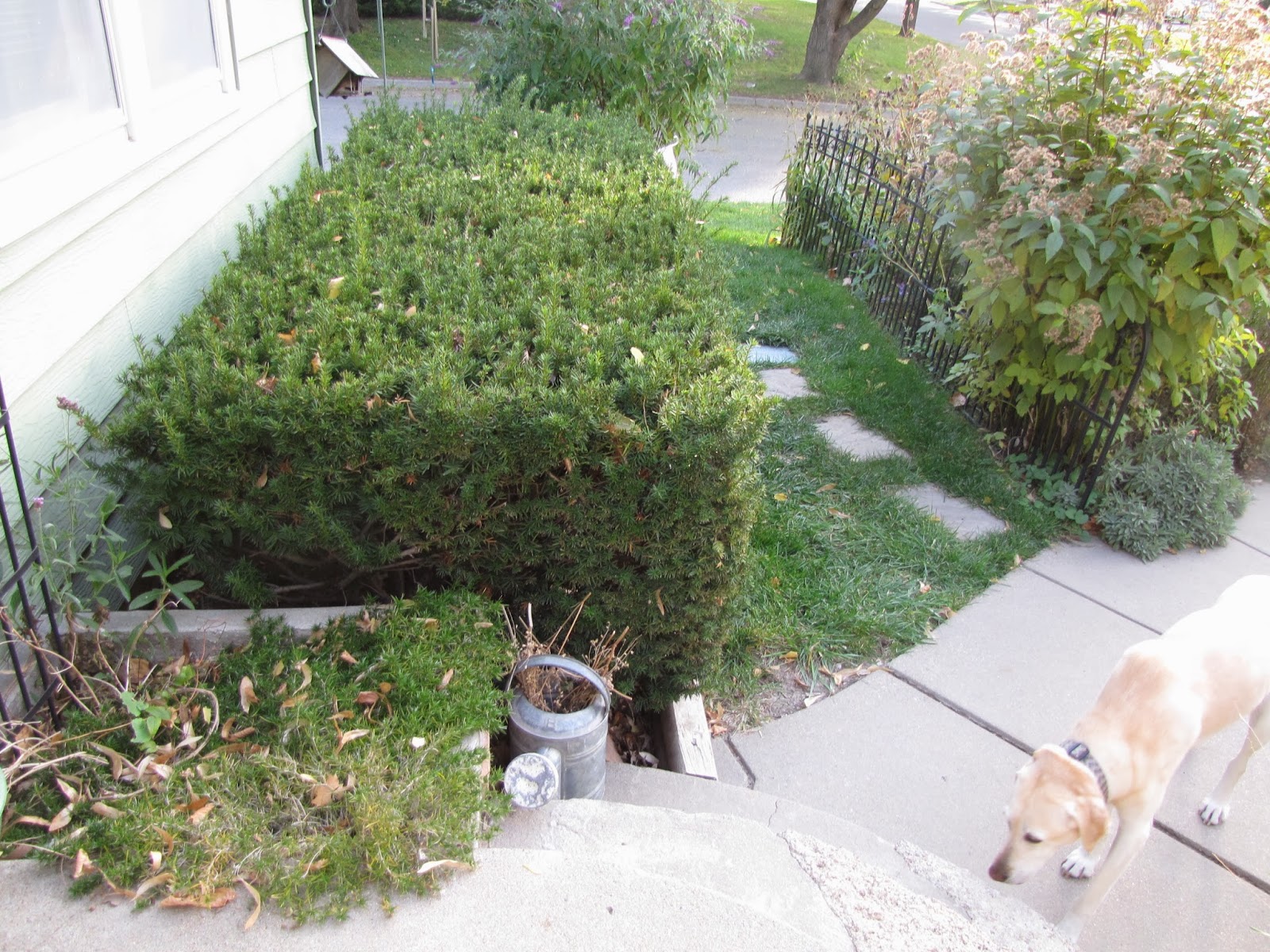
Here is where I got off of the porch. I think I've already named most of the noticeable plants, so I'm not going to label many here. The plant on the left next to the Liatris is one of my favorites, Whorled milkweed. I've mentioned I dug it from an area at our church that was about to be dug up. It was growing there on its own, so it is a regional native.

This is a few feet along the path, heading west.

The Little bluestems are quite pretty this time of year.

The Rudbeckia maxima is pretty cool looking still. Last year, its first here, it only had 3 or 4 blooms. Oh, I see the few blooms of the Prairie dock I planted this spring, right behind the white trellis/bench. Maybe it will have much more next year.

We need to get the rain barrels drained. There are some plants that could use a drink.

I walked out to the east side of the area to take this one. I'm glad the Baptisia, which has been there 3 or 4 years is doing well. To the right of it is one of the new Swamp milkweeds I planted this year. On the far right, the Meadow rue has a nice golden color.

I hope fall is going well for you. I sure am thankful for the outdoor space we have that I get to garden in.