I've been looking at past March posts to compare how far along we are toward spring, and to see at what point I have had the flower beds cleaned up. Last year was behind the previous year, and this year seems to be a bit behind last year. People are saying it is too soon to rake the leaves off of the beds, but I just have to be outside working with the highs in the 50s and 60 we've been having. I am getting at least the top layer of leaves off so that the plants that are growing can have some light. I have also started taking off last year's dead growth on plants, putting it in piles across the street. As I work, I am pleased to see a number of plants coming up.
I just seem to have one clump of crocus, but am glad to see it blooming.

I'm glad to see the daffodils are growing.

I can't remember what kind of Mountain mint this is. The foliage is closer to the Short toothed than Virginia.
I like alliums.

I thinned the Drumstick alliums last year, but kept a few clumps.

I spent some time looking at photos from last year trying to figure out what this plant is, but I didn't figure it out. It sure looks big and ready to grow!

It's a good thing I cut back the sedges and some of the grasses, because they are ready to grow.

I'm glad to see a number of Penstemons have new growth.

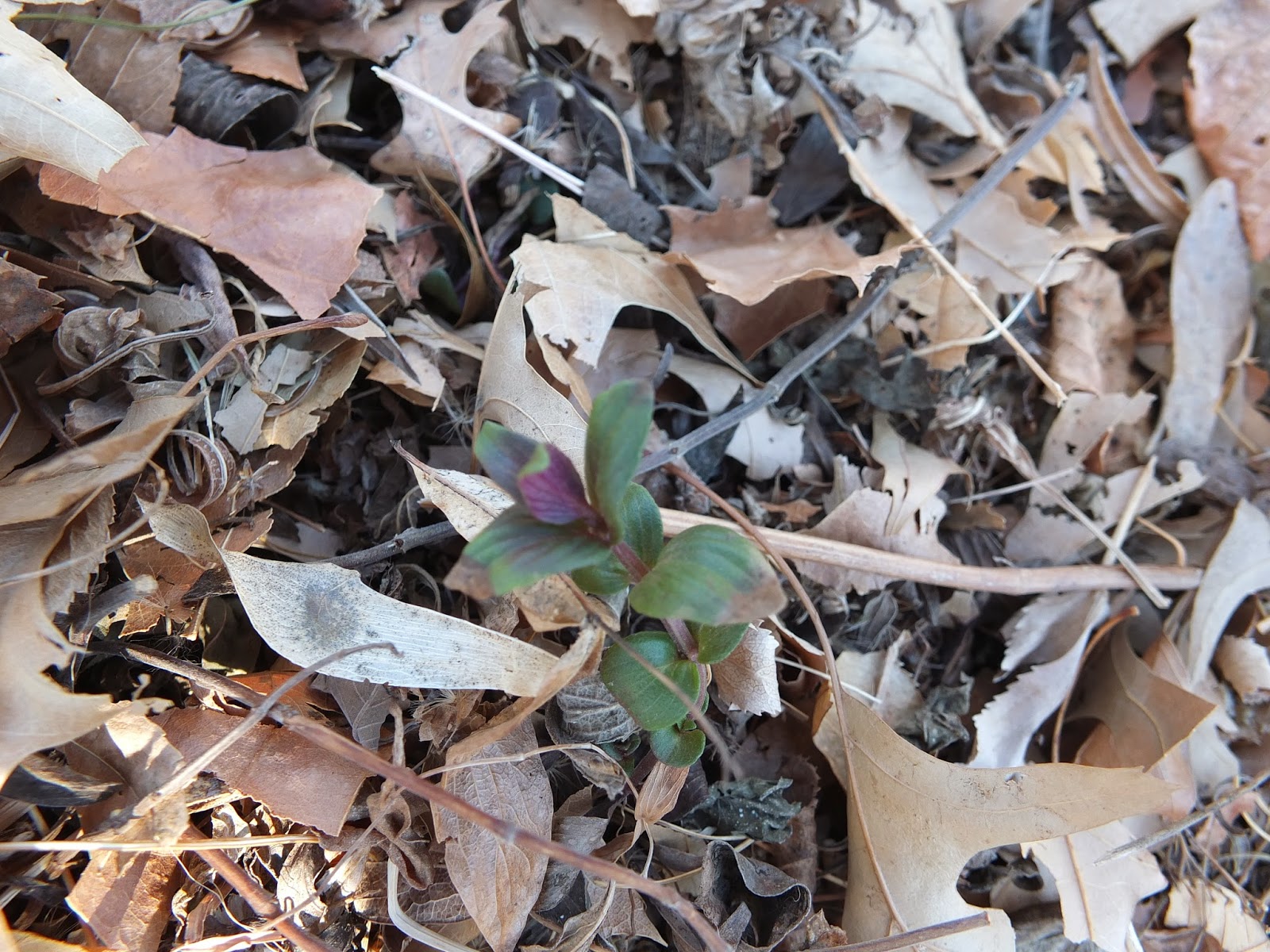
I don't know what these are yet, but am hoping they are one of the early spring blooming native plants I put in the last year or two.

The Prairie smoke geum is looking good.

I am excited to be subbing as a para now, and plan to only work a day or two this week. I'll pick the coolest days of the week to work. I hope to tackle this part of the yard soon.

I will soon be pulling the old leaves off of the Hellebores. Hopefully, they will be blooming soon. They were already blooming last year at this time.

I started the clean up in the front, since it is south facing. I figured spring comes a little sooner here.

The west side of the yard is not done yet. I plan to do that, hopefully, Monday.

I am going to have to take the circle "steppers" from the tree we had cut down in 2011 because they are starting to fall apart. I can find somewhere across the street to put them, since there are critters using them.

This may be my favorite part of the yard.

I now have some photos to look at for future spring comparisons, and soon, this will also be cleaned up, ready for new growth.

I'll finish up with a Purple milkweed pod. For those of you who just planted milkweed last year, it is one of the last plants to come up in the spring, so don't give up on it when everything else is up. Once up, it grows pretty quickly, and catches up.

For those of you with snow still on the ground, I hope it melts quickly, and your plants have benefited from all of that moisture. It's dry here. I hope we get some rain.
( I posted this last night, and this morning's paper's "Five Things to Do This Week" included cutting things back and planting radishes and lettuce. That's good. I forgot to mention that I got lettuce, spinach, carrots, radishes, and peas in last week. It's the latest I've planted these things for a number of years. I normally plant in February, but was able to get some in in January last year. Each year, they come up when the soil warms enough, and can withstand cold and even being snowed on. Now, we need some moisture.)
I just seem to have one clump of crocus, but am glad to see it blooming.
I'm glad to see the daffodils are growing.
I can't remember what kind of Mountain mint this is. The foliage is closer to the Short toothed than Virginia.
I like alliums.
I thinned the Drumstick alliums last year, but kept a few clumps.
I spent some time looking at photos from last year trying to figure out what this plant is, but I didn't figure it out. It sure looks big and ready to grow!
It's a good thing I cut back the sedges and some of the grasses, because they are ready to grow.
I'm glad to see a number of Penstemons have new growth.
I don't know what these are yet, but am hoping they are one of the early spring blooming native plants I put in the last year or two.
The Prairie smoke geum is looking good.
I am excited to be subbing as a para now, and plan to only work a day or two this week. I'll pick the coolest days of the week to work. I hope to tackle this part of the yard soon.
I will soon be pulling the old leaves off of the Hellebores. Hopefully, they will be blooming soon. They were already blooming last year at this time.
I started the clean up in the front, since it is south facing. I figured spring comes a little sooner here.
The west side of the yard is not done yet. I plan to do that, hopefully, Monday.
I am going to have to take the circle "steppers" from the tree we had cut down in 2011 because they are starting to fall apart. I can find somewhere across the street to put them, since there are critters using them.
This may be my favorite part of the yard.
I now have some photos to look at for future spring comparisons, and soon, this will also be cleaned up, ready for new growth.
I'll finish up with a Purple milkweed pod. For those of you who just planted milkweed last year, it is one of the last plants to come up in the spring, so don't give up on it when everything else is up. Once up, it grows pretty quickly, and catches up.
For those of you with snow still on the ground, I hope it melts quickly, and your plants have benefited from all of that moisture. It's dry here. I hope we get some rain.
( I posted this last night, and this morning's paper's "Five Things to Do This Week" included cutting things back and planting radishes and lettuce. That's good. I forgot to mention that I got lettuce, spinach, carrots, radishes, and peas in last week. It's the latest I've planted these things for a number of years. I normally plant in February, but was able to get some in in January last year. Each year, they come up when the soil warms enough, and can withstand cold and even being snowed on. Now, we need some moisture.)


