It's time for a curb area update, but there are lots of other flowers blooming, so I am also including some of those, for Garden Blogger's Bloom Day, hosted by Carol. I think I'll go ahead and link this in for Pam's Foliage Follow Up. Since I showed the east side of the house most recently, I decided not to include those blooms this time.
My part of Nebraska is in zone 5b. Spring and summer both came early, and the flowers continue to be opening earlier than usual.
First, when I walked out of the house, I decided to take a photo of the liatris, love lies bleeding, and helenium, 'Ruby Tuesday' in bloom. The plants that I think are rudbeckia 'goldquelle' that I knocked on a woman's door to get are about to bloom, too. I've mentioned I moved all these from other parts of the yard, except for the love lies bleeding, which came up where they are growing.

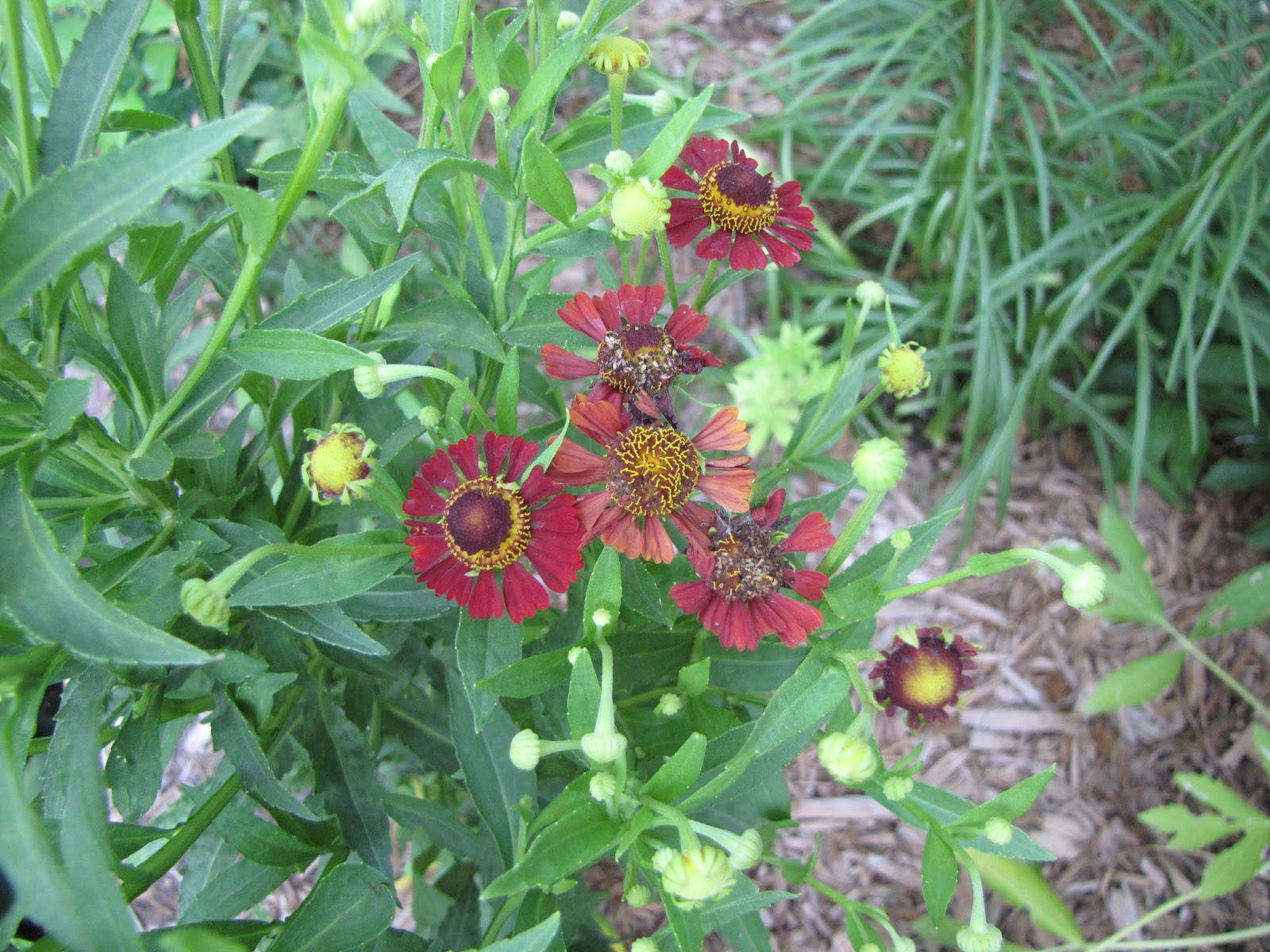
Here's the helenium 'ruby Tuesday'.

OK, here's the curb area. I am in the process of changing out some of the plants on the west (left) side of the bed, because this area gets afternoon shade.

I planted several of these sedges that were recommended for dry shade at our local arboretum. Their name isn't coming to me right now, though.

I can't remember which liatris I planted, and which planted itself. I didn't know liatris self sowed. Much of the first plants I got are 'Kobold'. I wish I would have understood there are native kinds, and gotten some of them instead. I do have a collection of them now, though.

I trimmed back the first spent goldenrod blooms, and there are new ones coming on. The black eyed Susans are looking great this year. The newer kind of rudbeckia, behind and to the right of these, that I thought was going to be an annual, has nice looking blooms, but the stems are not looking so great. Actually, they may have self sown, because I don't remember if I planted these in this spot.

The persicaria I got from a friend last year has been blooming a few days. The Jupiter's beard behind it is on its second flush of blooms.

I was pleased to find a couple kinds of native grasses on sale, buy one, get one free last week. I got several pots of this blue grama grass, and the last prairie dropseed. When I got home, I decided to divide each one into two clumps, so I got a very good deal on these!

I got the perennial geraniums deadheaded, and several of them are starting another round of blooms.

The lantanas were slow to grow, but most are now blooming well. That's another blue grama grass plant. I hope it grows OK.

The lavenders are on their second flush of blooms, too.

We've made it to the edge of the bed, facing back west. The white blooming plant on the right is winter savory.

We'll head over to the east side of the sidewalk. The plant across from the winter savory is germander.

The iris has a new flower stem coming up.

I have also been trying to keep up with deadheading the Stokes asters.

I have a number of volunteer plants with little salvia like blue blooms. To the right of one of these, is a sedum from several short stems I stuck in the ground a couple years ago. It sure has grown, and is blooming early, like most other flowers.

Here's a close up of the volunteer plant. Do you know what they are? I've been pulling some of them out.

The other butterfly milkweed plants are finished blooming. This one is looking awesome next to the salvia plants behind it.

The day lily plants have been struggling in the heat this year.
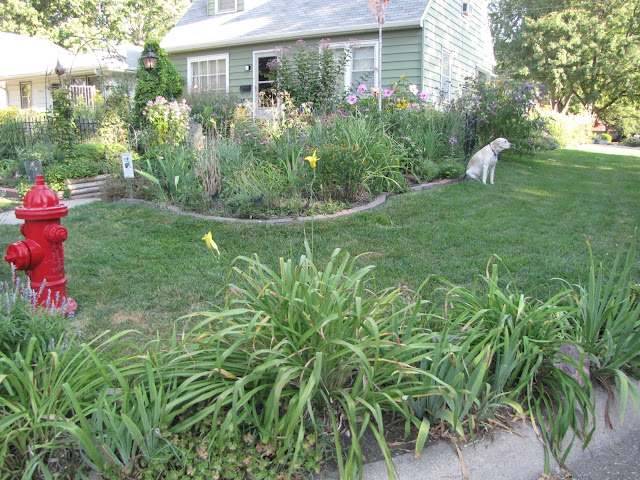
Here's a peek at the east front bed. Again, I deadheaded the helenium, 'mardi gras' and it is reblooming. I've had to pull a number of the coneflowers, due to aster yellows, but I'm glad there are some that seem to be healthy. Can you see the Joe Pye weed in the back?

Now, we'll go back to see the curb beds from the other side.

In May, I cut back the fireworks goldenrod, and am glad it's not blooming yet, but it looks like it will soon.

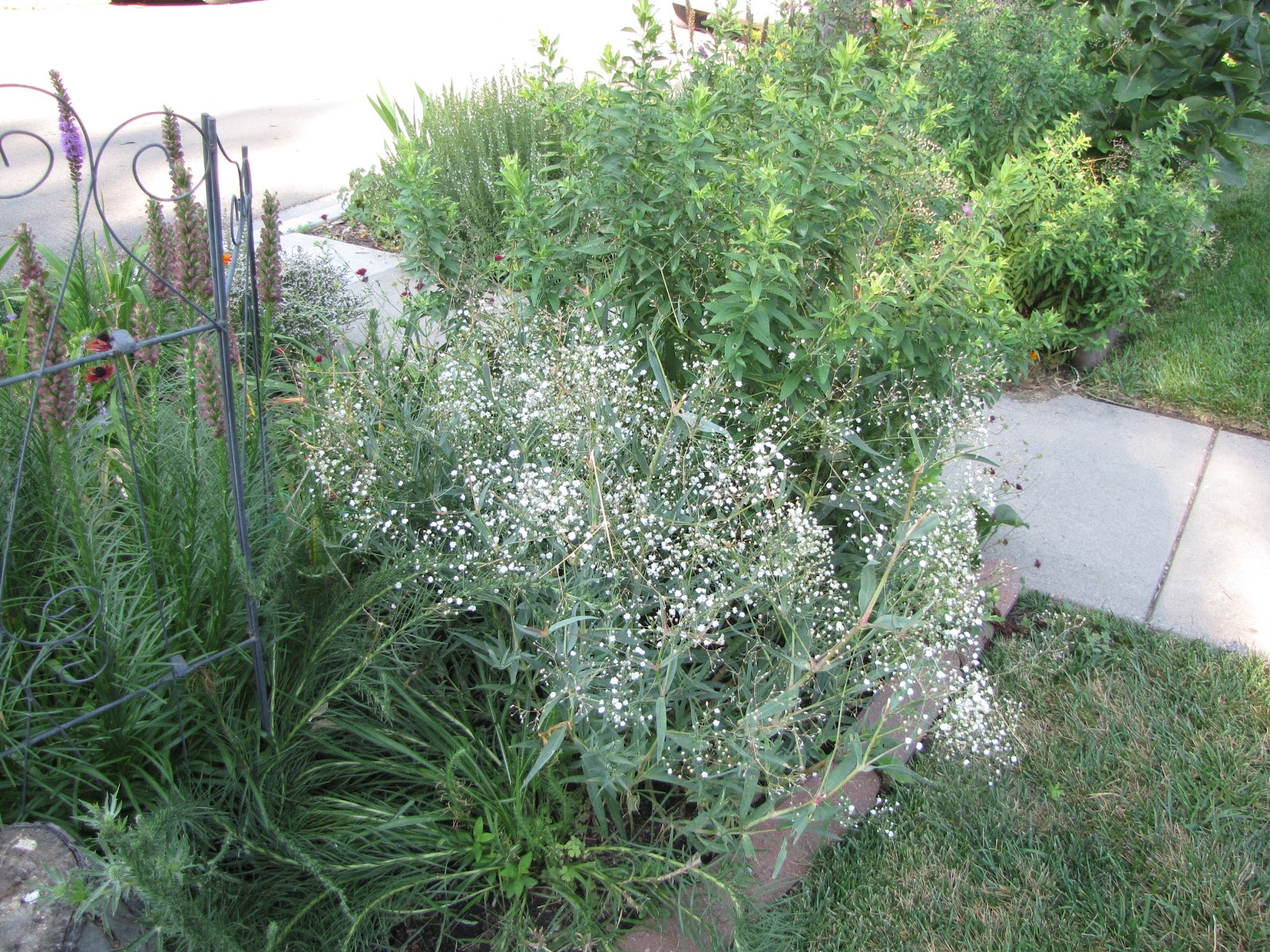
I didn't get any baby's breath picked to dry, but probably still could.

I cut the New England asters back each year, to help them stay somewhat compact and healthy. The lower stems tend to turn brown. These beds were started two different years, so when I got some knautia (the maroon colored blooms) to put on the east side, it turned out to be a different kind than across the way. It self sows, but the other one does not.

There really isn't room for this cleome here, but I'm letting it stay here so far.

Continuing west, I hope some monarchs lay some eggs on the milkweed. The foliage is pretty cool, even after it blooms. The daylily foliage does not look so great.

The daylilies are almost finished blooming for the season. I hope next year is better for them.

This ironweed is almost finished blooming. The ones I transplanted from this clump in the area where the tree used to be are just starting to bloom.

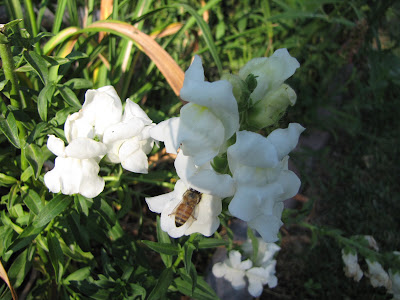
The snapdragons live over most winters, do well in the cold, and have handled the heat alright, too. I'm glad this bee likes them.
We made it to the end of the bed, and are now facing east. There are fireworks goldenrod plants, a different kind of baby's breath, and daylilies to somewhat tie in with the other side of the sidewalk. This is the area where I moved some of the coral bells to from in front of the house when the tree was cut down.

I will continue to speak of the merits of deadheading. This bush clematis plant has been blooming since early spring. I kind of hated cutting the seedheads off, though, because they are so cool looking. I can see one in this photo.

I took out the sedums that weren't doing well in this area. I planted a couple of ironweeds, a different kind from the ones I already have. There is still some room for other plants, though.

I planted the prairie dropseed between the ironweed plants.

This salvia 'caradonna' is more toward the street side of the bed.

Heading over to the area across where a sidewalk would be, this lisianthus survived the winter, because it was so mild.

The gray headed coneflowers are loaded with blooms.

This bloom is on a very tall, wiry plant. I'm not sure what it is.

The bees sure have enjoyed the monarda. This is the first time I've grown the native kind. I love it! I wonder if it will spread much. Before it bloomed, I would snip a stem or two off, and put it with a few decaf tea bags to make some ice tea, or just a small amount with one bag for hot tea.

The Mexican sunflower is not as tall as it was last year, but it's probably still growing. I'm pleased to see it is blooming. Now, monarchs, come enjoy them!

This clematis is 'Mongolian Snowflakes'. I found it at the arboretum.

Finally, here is Heidi, showing you how large the butterfly bush is this year, and how lovely the hibiscus blooms are. Oh, and there is a stem of the Joe Pye weed towering over everything.

Some of you have gotten too much rain, and others are desperately dry. I hope the weather in August is better for us and our gardens. Still, I am enjoying the blooms and most of the foliage on the plants in our garden.
My part of Nebraska is in zone 5b. Spring and summer both came early, and the flowers continue to be opening earlier than usual.
First, when I walked out of the house, I decided to take a photo of the liatris, love lies bleeding, and helenium, 'Ruby Tuesday' in bloom. The plants that I think are rudbeckia 'goldquelle' that I knocked on a woman's door to get are about to bloom, too. I've mentioned I moved all these from other parts of the yard, except for the love lies bleeding, which came up where they are growing.

Here's the helenium 'ruby Tuesday'.
OK, here's the curb area. I am in the process of changing out some of the plants on the west (left) side of the bed, because this area gets afternoon shade.

I planted several of these sedges that were recommended for dry shade at our local arboretum. Their name isn't coming to me right now, though.

I can't remember which liatris I planted, and which planted itself. I didn't know liatris self sowed. Much of the first plants I got are 'Kobold'. I wish I would have understood there are native kinds, and gotten some of them instead. I do have a collection of them now, though.

I trimmed back the first spent goldenrod blooms, and there are new ones coming on. The black eyed Susans are looking great this year. The newer kind of rudbeckia, behind and to the right of these, that I thought was going to be an annual, has nice looking blooms, but the stems are not looking so great. Actually, they may have self sown, because I don't remember if I planted these in this spot.

The persicaria I got from a friend last year has been blooming a few days. The Jupiter's beard behind it is on its second flush of blooms.

I was pleased to find a couple kinds of native grasses on sale, buy one, get one free last week. I got several pots of this blue grama grass, and the last prairie dropseed. When I got home, I decided to divide each one into two clumps, so I got a very good deal on these!

I got the perennial geraniums deadheaded, and several of them are starting another round of blooms.

The lantanas were slow to grow, but most are now blooming well. That's another blue grama grass plant. I hope it grows OK.

The lavenders are on their second flush of blooms, too.

We've made it to the edge of the bed, facing back west. The white blooming plant on the right is winter savory.

We'll head over to the east side of the sidewalk. The plant across from the winter savory is germander.

The iris has a new flower stem coming up.

I have also been trying to keep up with deadheading the Stokes asters.

I have a number of volunteer plants with little salvia like blue blooms. To the right of one of these, is a sedum from several short stems I stuck in the ground a couple years ago. It sure has grown, and is blooming early, like most other flowers.

Here's a close up of the volunteer plant. Do you know what they are? I've been pulling some of them out.

The other butterfly milkweed plants are finished blooming. This one is looking awesome next to the salvia plants behind it.

The day lily plants have been struggling in the heat this year.

Here's a peek at the east front bed. Again, I deadheaded the helenium, 'mardi gras' and it is reblooming. I've had to pull a number of the coneflowers, due to aster yellows, but I'm glad there are some that seem to be healthy. Can you see the Joe Pye weed in the back?

Now, we'll go back to see the curb beds from the other side.

In May, I cut back the fireworks goldenrod, and am glad it's not blooming yet, but it looks like it will soon.

I didn't get any baby's breath picked to dry, but probably still could.
I cut the New England asters back each year, to help them stay somewhat compact and healthy. The lower stems tend to turn brown. These beds were started two different years, so when I got some knautia (the maroon colored blooms) to put on the east side, it turned out to be a different kind than across the way. It self sows, but the other one does not.

There really isn't room for this cleome here, but I'm letting it stay here so far.

Continuing west, I hope some monarchs lay some eggs on the milkweed. The foliage is pretty cool, even after it blooms. The daylily foliage does not look so great.

The daylilies are almost finished blooming for the season. I hope next year is better for them.

This ironweed is almost finished blooming. The ones I transplanted from this clump in the area where the tree used to be are just starting to bloom.

The snapdragons live over most winters, do well in the cold, and have handled the heat alright, too. I'm glad this bee likes them.

We made it to the end of the bed, and are now facing east. There are fireworks goldenrod plants, a different kind of baby's breath, and daylilies to somewhat tie in with the other side of the sidewalk. This is the area where I moved some of the coral bells to from in front of the house when the tree was cut down.

I will continue to speak of the merits of deadheading. This bush clematis plant has been blooming since early spring. I kind of hated cutting the seedheads off, though, because they are so cool looking. I can see one in this photo.

I took out the sedums that weren't doing well in this area. I planted a couple of ironweeds, a different kind from the ones I already have. There is still some room for other plants, though.

I planted the prairie dropseed between the ironweed plants.

This salvia 'caradonna' is more toward the street side of the bed.

Heading over to the area across where a sidewalk would be, this lisianthus survived the winter, because it was so mild.

The gray headed coneflowers are loaded with blooms.

This bloom is on a very tall, wiry plant. I'm not sure what it is.

The bees sure have enjoyed the monarda. This is the first time I've grown the native kind. I love it! I wonder if it will spread much. Before it bloomed, I would snip a stem or two off, and put it with a few decaf tea bags to make some ice tea, or just a small amount with one bag for hot tea.

The Mexican sunflower is not as tall as it was last year, but it's probably still growing. I'm pleased to see it is blooming. Now, monarchs, come enjoy them!

This clematis is 'Mongolian Snowflakes'. I found it at the arboretum.

Finally, here is Heidi, showing you how large the butterfly bush is this year, and how lovely the hibiscus blooms are. Oh, and there is a stem of the Joe Pye weed towering over everything.

Some of you have gotten too much rain, and others are desperately dry. I hope the weather in August is better for us and our gardens. Still, I am enjoying the blooms and most of the foliage on the plants in our garden.


